Traditional and Complementary Medicine (TCM) encompasses a wide array of culturally rooted practices used throughout history to prevent, diagnose, and treat physical and mental illnesses. Although definitions vary globally, institutions such as the World Health Organization (WHO), the U.S. National Center for Complementary and Integrative Health (NCCIH), and the European Federation for Complementary and Alternative Medicine (EFCAM) have contributed to a conceptual framework distinguishing traditional, complementary, alternative, and integrative approaches. In Turkey, regulatory progress has been significant, culminating in the 2014 Traditional and Complementary Medicine Practices Regulation, which standardized training requirements, practitioner qualifications, and authorized medical centers. This regulatory framework formally recognizes 15 therapeutic modalities, including phytotherapy, larval therapy, prolotherapy, music therapy, osteopathy, mesotherapy, chiropractic, homeopathy, ozone therapy, reflexology, cupping therapy, hirudotherapy, apitherapy, hypnotherapy, and acupuncture. Each modality carries distinct historical foundations and therapeutic mechanisms. Phytotherapy employs standardized medicinal plants; larval therapy utilizes Lucilia sericata larvae for selective debridement; prolotherapy promotes connective tissue repair via controlled inflammation; and music therapy provides psychological and physiological benefits traced back to ancient civilizations. Manual approaches such as osteopathy and chiropractic focus on restoring structural and functional balance. Other modalities such as mesotherapy, homeopathy, ozone therapy, cupping, and apitherapy offer diverse applications ranging from immunomodulation to localized therapeutic stimulation. Public interest in TCM has grown globally and in Turkey due to increased life expectancy, chronic disease prevalence, dissatisfaction with conventional treatment limitations, and widespread informal information sources. Despite high usage rates particularly among older adults, cancer patients, and families—professional guidance remains limited. This gap highlights the need for clinicians to engage in evidence-based discussions, ensuring safe integration of traditional practices with conventional medical care. Overall, TCM represents an evolving healthcare dimension that necessitates informed regulation, scientific ev
Traditional and Complementary Medicine Practices: Integrative Approaches for Sustainable Health
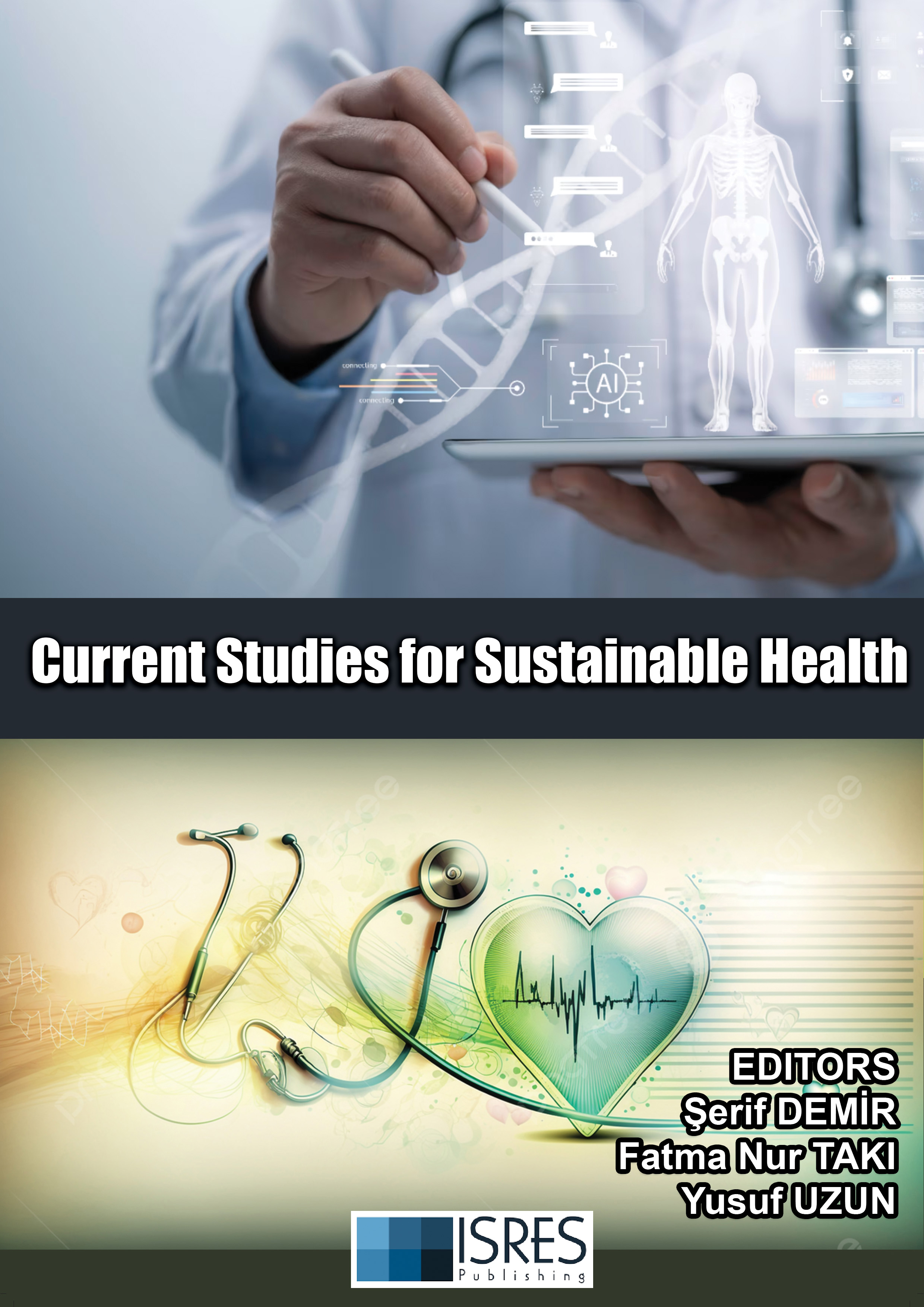
Current Studies for Sustainable Health
Editors: Şerif DEMİR, Fatma Nur TAKI, Yusuf UZUN
315
Traditional and Complementary Medicine Practices: Integrative Approaches for Sustainable Health
Chapter Authors: Zeynep Bilgenur MEMİŞOGLU ŞENER
Pages: 199-207
Other Chapters
ustainable Microbiota Targeted Interventions in Psychiatric Disorders
Çağatay Han TÜRKSEVEN
More Info Pages: 1-22
The Role of Physiotherapists in Advancing Sustainable Health within the Framework of the Sustainable Development Goals
Tuğba ARSLAN, Serdar ARSLAN
More Info Pages: 23-33
Homelessness and Sustainable Health: A Holistic Approach to Community Health
Sümeyye SARIŞAHİN
More Info Pages: 34-50
Sustainable Health for Parents of Children with Special Needs
Sümeyye SARIŞAHİN, Selma ERCAN DOĞU
More Info Pages: 51-67
Sustainability In The Healthcare Sector And Health Education
Hande KÜSEN SEL
More Info Pages: 68-75
Metaheuristic Approaches for Sustainable Health: A Case Study on Red Fox Optimization
Fatma Nur UZUN, Ömer Kaan BAYKAN
More Info Pages: 76-122
Skin Cancer: Pathophysiology and Epidemiology
Hanife Yüksel ÇAKMAK, Hasan EGE
More Info Pages: 123-138
Circadian Rhythms and Chronotherapy: Integrating Molecular and Physiological Mechanisms into Physiotherapy and Rehabilitation Sciences
Fatma Nur TAKI, Kerim Çağrı AKDAĞ
More Info Pages: 139-150
In The Beginning Lies The Risk: Fetal Toxic Exposure And The Origins Of Adult Disease
sra KIRSEVER, Gülnihal ŞİŞMAN, Hümeyra ŞİŞMAN
More Info Pages: 151-182
Traditional and Complementary Medicine Practices: Integrative Approaches for Sustainable Health
Nalan SOYDAŞ ENGİN
More Info Pages: 183-198
Traditional and Complementary Medicine Practices: Integrative Approaches for Sustainable Health
Zeynep Bilgenur MEMİŞOGLU ŞENER
More Info Pages: 199-207
The Importance of Pilates in Pregnant Women and Principles of Practice
Yeşim ANIK ÇANKAYA, Musa ÇANKAYA
More Info Pages: 208-230
Quantum Nutrition And Health Sustainability
Tuba TURKUT, Fatma Nur TAKI
More Info Pages: 231-255
Fertility Preservation Approaches for Sustainable Reproductive Health
Müşerref Banu YILMAZ
More Info Pages: 256-263
Budapest/Hungary Conferences - August 28-31, 2025
We are pleased to invite you to ISRES conferences, which will be held at Obuda University/Budapest/Hungary on August, 28-31, 2025. The following conferences will be held in Budapest/Hungary:...
15.01.2025
Trabzon/Türkiye Conferences - May 01-04, 2025
ISRES Spring Conferences - Trabzon/Turkiye SOCIAL SCIENCES – May 1-4, 2025, Trabzon, Türkiye * 5th International Conference on Social Science Studies - IConSoS2025 ...
11.12.2024
Peja/Kosovo Conferences - July 10-13, 2025
We are pleased to invite you to our conferences, which will be held at University of Peja Haxhi Zeka on July, 10-13, 2025. The following conferences will be held in Peja/Kosovo: - 7th Internat...
28.11.2024
_Sayfa_001_23-12-2025.jpg)

 (1)_16-12-2024.jpg)

_29-12-2024.jpg)
 (1)_01-01-2025_10-03-2025.jpg)
_01-01-2025.jpg)